
My sister was replacing some of the bushes on their property and wondered if I wanted their old ones. With a fall to-do list longer than my arm, finding a home on my property for the old bushes wasn’t high on my “yes” list, but I do love adding to my perennial beds and “free” is too good to pass up when it comes to landscaping. Before the day was out, there were four spirea bushes in my driveway on plastic sleds awaiting their new home.
I had been at school for the entire day, working through my school to-do list that was equally as long and so the bushes sat overnight. To be honest, I didn’t have any immediate plans to get them in the ground as there were several more pressing items to take care of, but, on Sunday, when I was unable to fix the mower myself and would have to wait to get it in for service, and when the forecast called for rain by early afternoon, I decided to get them in the ground so that Mother Nature might welcome them to the farm with a slow, steady soak.
It took Trudy and I several minutes of walking around and discussing options before we settled on where they should go. Every place I found meant moving something else or rethinking my original plans for the space, but that’s the way farm projects go. With my canine supervisor right on my heels, I finally decided on a couple of spots and got busy digging.
The bushes went in easily enough and I think they will flourish in their new home, but moving them in did mean moving some other plants around and it wasn’t long before I found myself staring down a task I didn’t want to do. I had two Japanese painted ferns in two different spots that needed to be relocated. They both looked out of place where they were, but my plans for moving them were much more complicated than just digging a hole and relocating the plants. I stood in the lawn, leaning on my shovel, staring at plants that I had more consciously than not ignored moving for months, knowing all that would be involved when I finally came to terms with it. It didn’t take me long to realize, however, that nothing would ever make the task easier and so today might as well be the day.
Where The Red Fern Grows is one of my all-time favorite books. I’ve read the book more than a dozen times I am sure and every single time I have read the story out loud. The first time I read it was with my son. Jacob was then around eleven years old, and it was our nightly read aloud. We both loved that time spent reading together, curled up under blankets on the couch, reading the story of Billy Colman and his dogs. But when the book ended, tears streaming down both of our faces, my son yelled through his heartache, “I hate this book! I hate this book!” It was, for both of us, one of the first times a book had made us feel a loss so deeply that it was hard to imagine it was a work of fiction. His perceived hatred wasn’t at the book really, it was at the power of a story to wring our hearts out with sorrow. I’ve read Wilson Rawls’ classic book to my students every year that I’ve taught third or fourth grade. I still cry with deep heartache every time, but I absolutely love the story, and I love the lessons it includes for my students. So I continue to share it with that hope that they not only realize some of those lessons for themselves, but that they too, see how powerful books can be.
And so it was today, that I moved three Japanese painted ferns, ferns with beautiful red stems and the closest things I know to a “red fern” to the spot under the maple tree. There’s been a rock there for years, ever since our dog, Eli died. Eli’s sudden death was the first loss James and I suffered together and a heartache that hit us both harder than we could have imagined. Two of Eli’s stuffed animals still sit in front of the stone, untouched by the wild animals that pass through, untouched even by Trudy, despite her shared love of stuffies. There’s a smaller rock, beside Eli’s stone where Beatrix is buried. The only grown chicken we’ve ever lost, James had done everything he could to save her when an egg got stuck, but she didn’t survive. He buried her before I came home, knowing my heart was too tender to see one of my feathered girls gone.
And so today, under a tree James used to tap for syrup, I dug a new hole for the ferns. Between the trunk of the beautiful maple that has doubled in size since we moved in and the stones of my beloved pets, next to the bench that looks out over the pasture, I dug a hole for the ferns. And then I walked back to the house, into the bedroom, and got the urn from my nightstand and then sat on the porch next to James’ empty seat.
For the second time since he passed, I opened up a container that holds the last tangible remains of my beloved and I scooped ashes out. It didn’t feel any easier than when I did the same thing this summer and it didn’t feel any less surreal. I knew James wanted some of his ashes to be spread on the farm and I always knew some would go under the maple tree, but there was still nothing that could make the actual doing of it any less emotional.
Before I planted the ferns in their new spot, I spread the small cup of ashes in the hole. My hope for a heaven feels like just an optimistic wish anymore, but I wondered, as I combined ash and dirt, if Eli had come running when James left this earth. I wondered if all the animals that were loved and cared for by him were there to greet him. I thought about what Billy says in the book when he buries his second dog beside his first. “I buried Little Ann by the side of Old Dan. I knew that was where she wanted to be. I also buried a part of my life along with my dog.” I put the ferns in place and carefully filled the dirt back in around them and I thought about the passage in the book that explains the significance of the title.
“I had heard the old Indian legend about the red fern. How a little Indian boy and girl were lost in a blizzard and had frozen to death. In the spring, when they were found, a beautiful red fern had grown up between their two bodies. The story went on to say that only an angel could plant the seeds of a red fern, and that they never died; where one grew, that spot was sacred.”
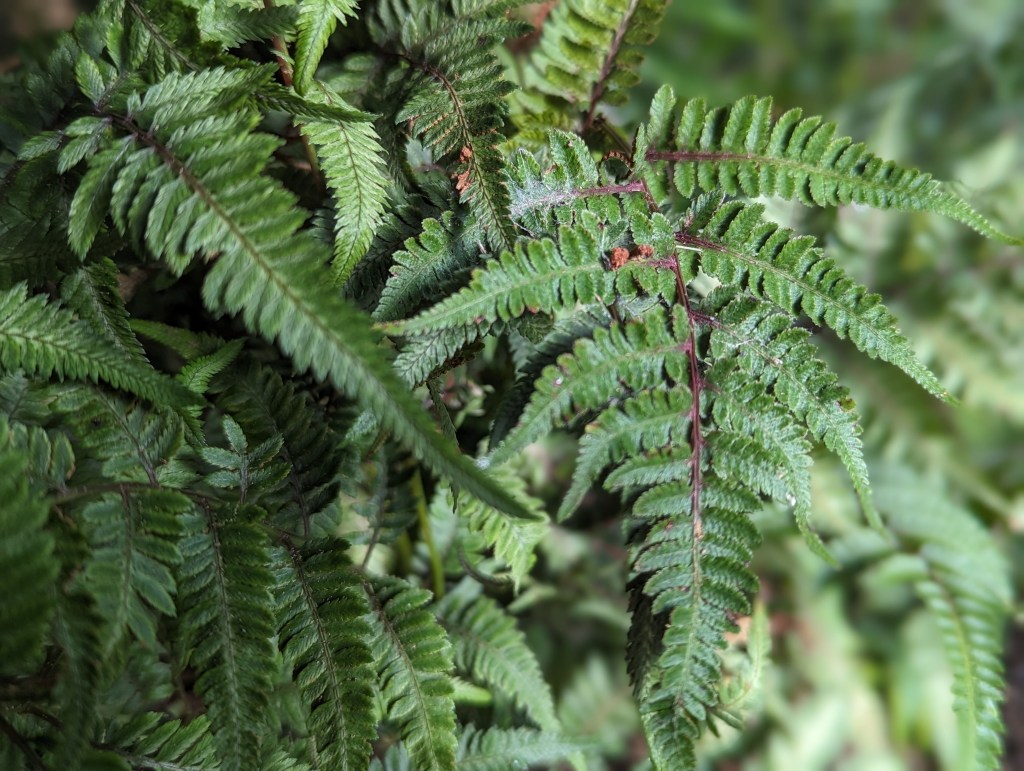
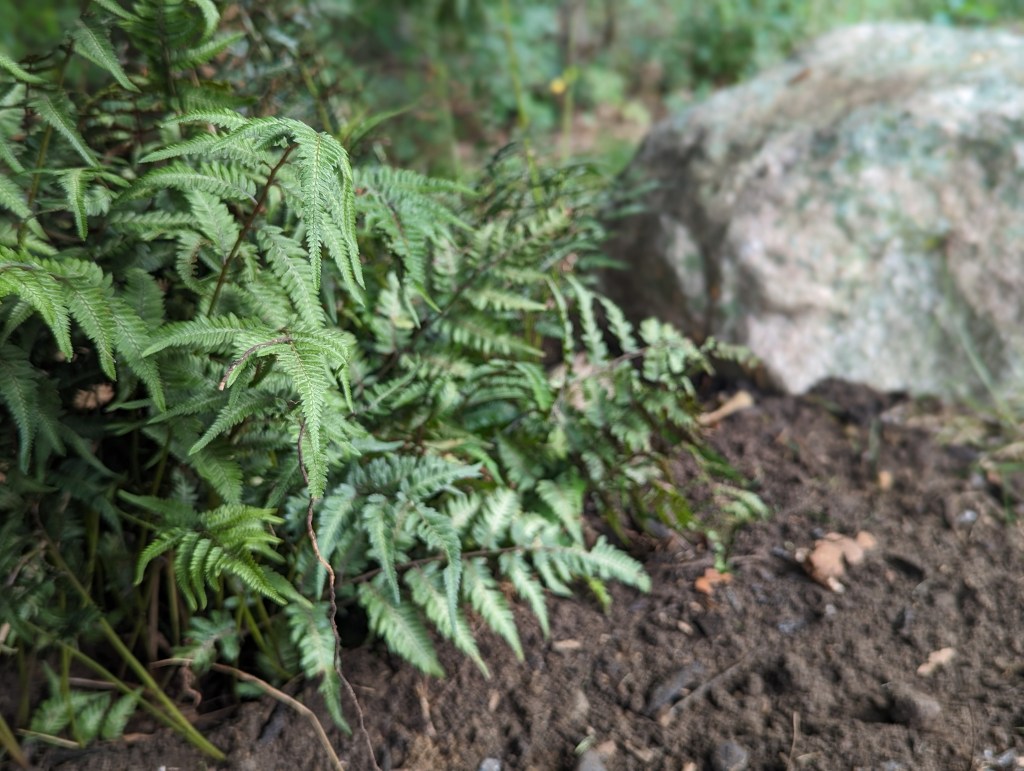
The rains never came this afternoon, and so Trudy and I went back out at dusk with a bucket full of water and gave the ferns a good soak before we headed to bed. These ferns might not have been planted by an angel, but I know more than one angel lies beneath them.
Someday, sooner than I want to admit, Trudy might have a spot under the maple as well. An impossibly hard thought for me to even let pass through my mind. All I know is, someday I hope to see all of them come running toward me when we are reunited once again. Someday. But for now, they have a sacred spot under the beautiful maple looking out over Someday Farm.
 Blessed Little Things